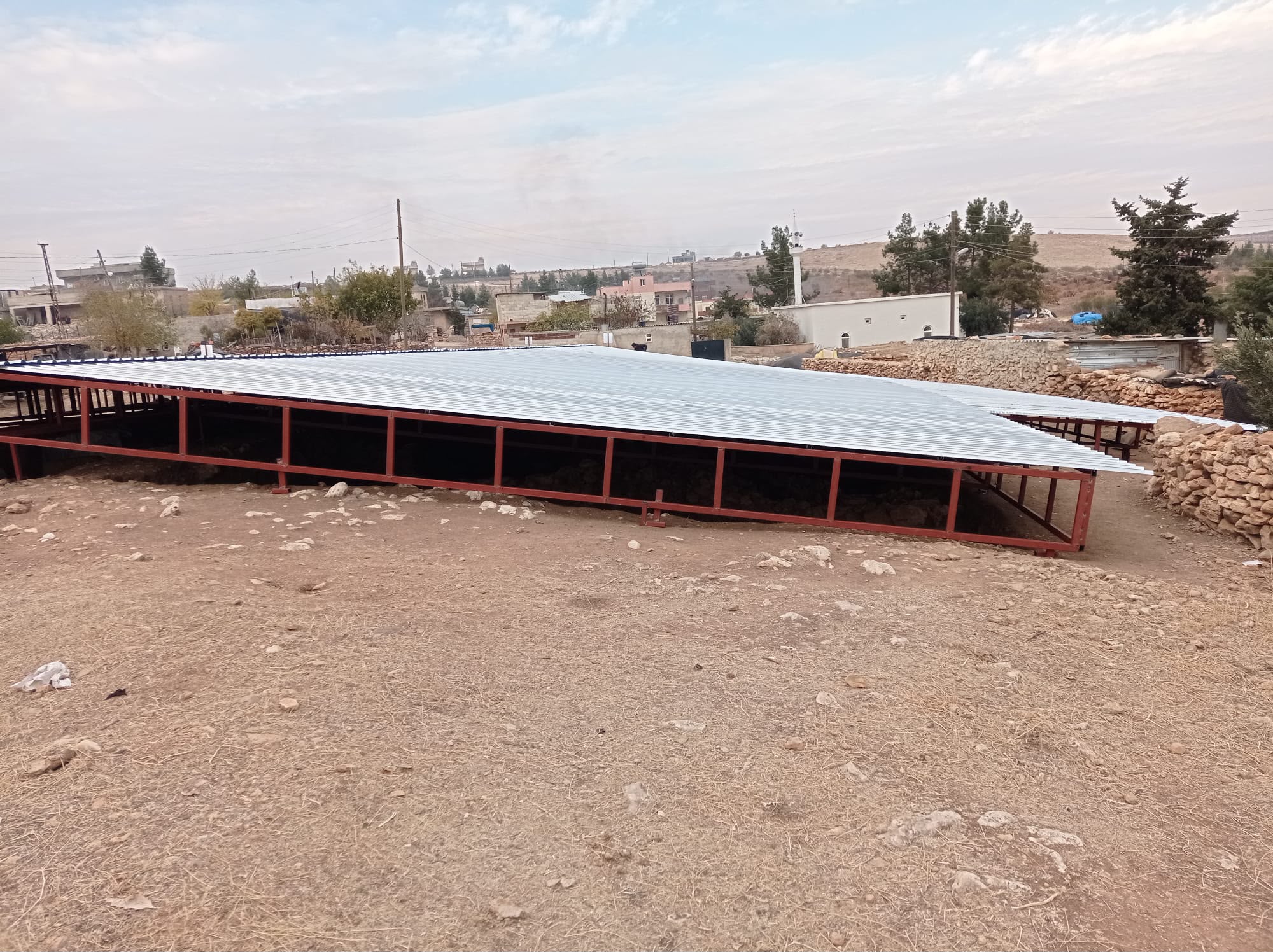
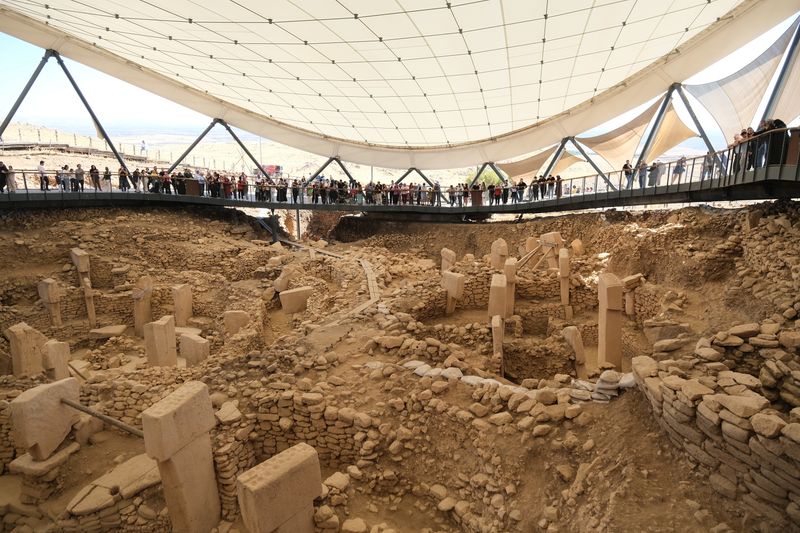
Şanlıurfa is home to some of the oldest traces of human history. Every archaeological discovery made on this land is more than a relic of the past; it is an invaluable part of humanity’s shared heritage. Sayburç is one of the most important examples of this legacy. Yet today, an important question needs to be asked: What is the point of protecting an archaeological site if visitors can barely see what makes it so important?
Sayburç is a remarkable archaeological site, known for its ancient stone reliefs and discoveries that shed light on prehistoric life. Its depictions of humans and animals offer valuable insights into the lifestyles, symbolic world, and artistic expression of people who lived thousands of years ago. Such an extraordinary heritage should be accessible not only to researchers but also to the wider public.
Unfortunately, the experience awaiting visitors at Sayburç falls short of this expectation.
The archaeological site at Sayburç has been covered by a protective roof. As a result, visitors can barely see some sections of the remains, and only by bending down, struggling to find a suitable angle, and looking through severely restricted sightlines. People travel to the site hoping to encounter history firsthand, only to find that they cannot properly examine the archaeological remains or appreciate their details.
We must ask a simple question: Do people come to Sayburç to see history, or to struggle just to catch a glimpse of it?
Of course, protecting archaeological remains is essential. Roof structures may serve important scientific purposes, shielding ancient remains from rain, sunlight, and other environmental factors. No one wants to see a heritage site that has survived thousands of years suffer damage. However, conservation must also take into account the public’s ability to access, observe, and understand the very remains being protected.
Because protecting history is one thing; making it virtually invisible is another.
The success of a cultural heritage site cannot be measured simply by whether it has been covered, landscaped, or officially opened to visitors. What truly matters is what people can see, what they can learn, and what kind of experience they take away. When visitors enter an archaeological site, they should be able to connect with the distant past, examine the reliefs, understand their significance, and leave with a lasting impression of what they have witnessed.
At Sayburç, however, having to bend down and search for a suitable viewing angle in order to see certain sections detracts from that experience. This is not merely a question of visitor comfort. It is also a question of making cultural heritage accessible to society, promoting it effectively, and passing it on to future generations.
Consider this: Visitors travel considerable distances to discover Şanlıurfa’s historical treasures. If they arrive at Sayburç and leave without being able to properly see its archaeological remains, is that not a problem? When students, researchers, and domestic and international tourists visit the site, how effectively do the current conditions help them understand its historical significance?
These are questions that the relevant authorities and experts should take seriously.
Moreover, the issue extends beyond the people who visit Sayburç. With its extraordinary archaeological wealth, Şanlıurfa has the potential to become an internationally recognised destination for history and cultural tourism. But realising this potential requires more than excavating and preserving ancient remains. It also requires presenting them effectively and making their significance accessible and understandable to visitors.
What Sayburç needs is not less protection, but a better balance between conservation and visibility.
The request to the authorities is straightforward: The extent to which the existing roof structure restricts visitors’ views should be reassessed. In consultation with qualified specialists, practical solutions should be developed to protect the archaeological remains while allowing visitors to see them clearly.
Suitable viewing platforms should be considered, sightlines should be improved, informative panels should be provided, and visitor routes should be designed to make the site easier to experience. These improvements must, of course, be implemented without compromising the safety and preservation of the archaeological remains. Nevertheless, an arrangement that prevents visitors from properly seeing or understanding what they have come to discover deserves to be reconsidered.
Cultural heritage does not fulfil its purpose simply by being preserved underground or shielded behind protective structures. Its significance grows when people learn about it, recognise its value, and develop a sense of ownership and responsibility towards it.
The marks carved into Sayburç’s stones have survived for thousands of years. The story of the people who created them has endured long enough to reach us today. But how effectively are we communicating that story to the people of our own time?
Everyone who cares about Şanlıurfa’s history, culture, and tourism future should be asking this question.
Sayburç is not merely an archaeological site that must be protected. It is also part of our shared heritage, and the public deserves the opportunity to see it, discover it, and understand it.
Our hope is that one day, visitors to Sayburç will be able to examine these extraordinary remains without having to bend down, struggle for a glimpse, or peer through restricted viewing angles.
Because history does not live on through preservation alone. It lives on when it can reach people.
Let the roof over Sayburç protect the archaeological remains—but let it never cover up our history!