Hagia Sophia
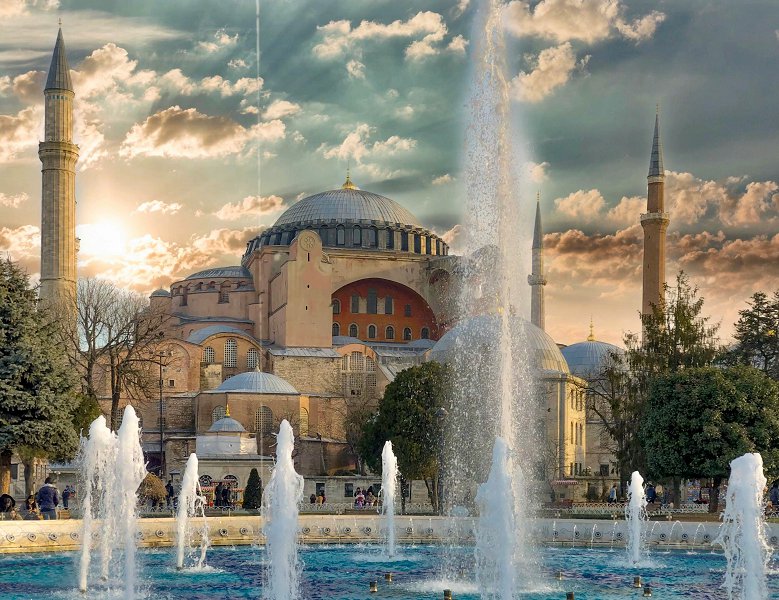
Few structures in human history have commanded as much awe, inspired as much reverence, or carried as profound a symbolic weight as Hagia Sophia. Rising above the skyline of Istanbul, this architectural titan is not merely a building—it is a statement in stone, a convergence of divine ambition, imperial power, and engineering genius.
A Revolution in Stone: The Dome That Defied Gravity
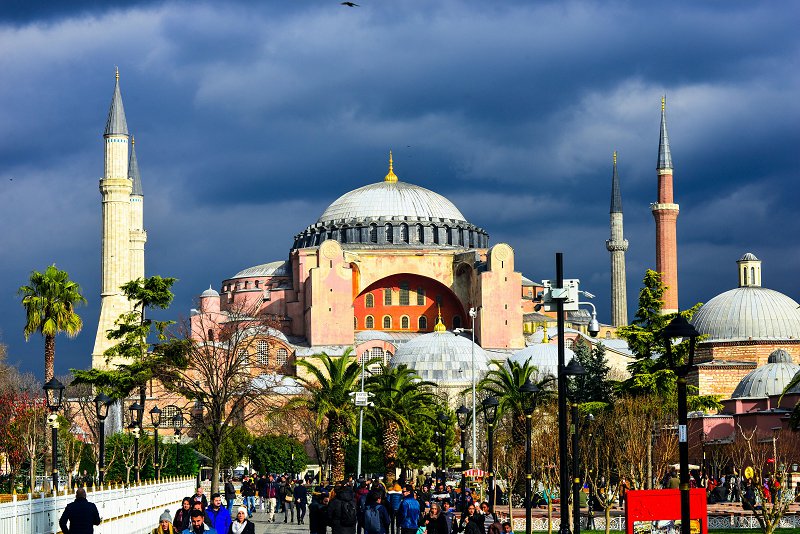
Hagia Sophia’s grandeur begins with its audacious scale and structural innovation. While earlier Byzantine basilicas were vast in footprint, they remained bound by traditional forms—elongated halls segmented into three naves, impressive yet earthbound. None dared what Hagia Sophia achieved: a dome of such colossal span that it seemed to hover effortlessly, as if suspended from heaven itself.
Rome’s Pantheon, with its massive, thick-walled dome, had long held the title of the ancient world’s most imposing vaulted space. Yet where the Pantheon was monumental, Hagia Sophia was transcendent. Its architects, Isidore of Miletus and Anthemius of Tralles, achieved the impossible: a dome supported by just four piers, cascading into half-domes and vaults that expanded the interior into a unified, luminous expanse. The effect was revolutionary—where the Pantheon felt grounded, Hagia Sophia soared.
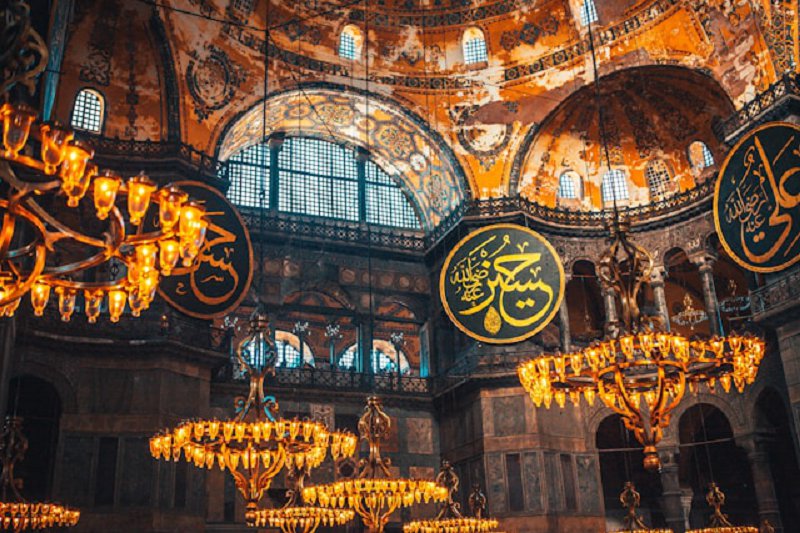
Light became an integral part of its mystique. Forty windows encircling the base of the dome allowed sunlight to pour in, transforming the golden mosaics into a shimmering sea of celestial radiance. Visitors, whether Byzantine worshippers or Ottoman conquerors, spoke of entering not just a building but a vision—a space where architecture dissolved into divine presence.
Beyond Engineering: A Manifesto of Empire
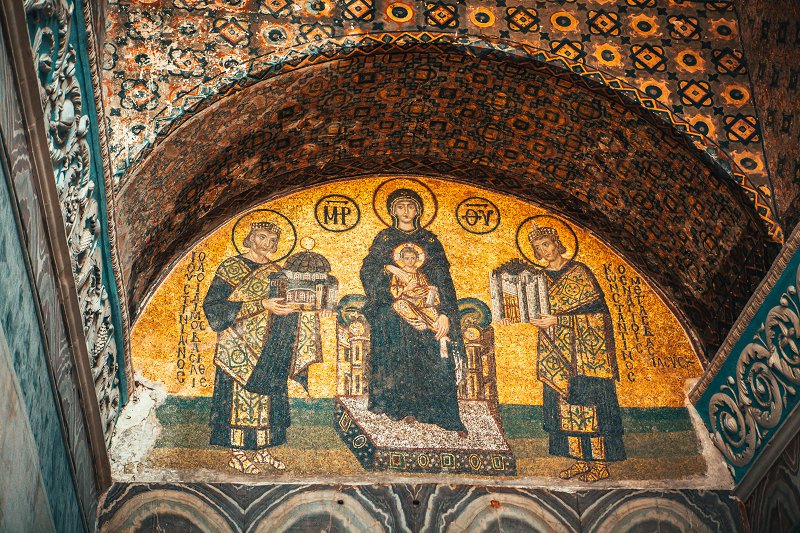
Yet Hagia Sophia was never merely a church. It was a calculated declaration of imperial ideology. In the Roman architectural tradition, the dome symbolized cosmic order and imperial authority—a legacy inherited from the Pantheon. When Constantinople became the New Rome, it demanded a structure that could match, even surpass, the old capital’s grandeur.
Emperor Justinian’s Hagia Sophia was that statement. Completed in 537 AD, it coincided with his ambitious campaign to reunite the fractured Mediterranean under Roman rule. The building was a physical manifesto: one God, one empire, one faith. Its unprecedented scale and harmonious design were not accidents but deliberate choices, echoing the Pax Romana reimagined for a Christian world.
The dome, unifying the vast interior under a single canopy, became a metaphor for Justinian’s vision—a world united under divine and imperial authority. To step inside was to be enveloped by that vision, to feel its weight and wonder.
A Legacy Across Empires
Hagia Sophia’s significance transcended its creators. When Constantinople fell to the Ottomans in 1453, Mehmed the Conqueror recognized its power instantly. Rather than demolishing it, he repurposed it as a mosque, layering Islamic calligraphy over Christian mosaics—a palimpsest of empires. For centuries, it stood as the heart of the Ottoman world, its dome a silent witness to sultans, ceremonies, and the pulse of an empire.
Even in its modern incarnation as a museum (and later, a mosque once more), Hagia Sophia has remained a universal symbol. Its ability to inspire—whether as a church, mosque, or monument—speaks to something beyond religion or politics: it is a testament to humanity’s capacity for the sublime.
Last Modification : 4/20/2026 12:55:44 PM