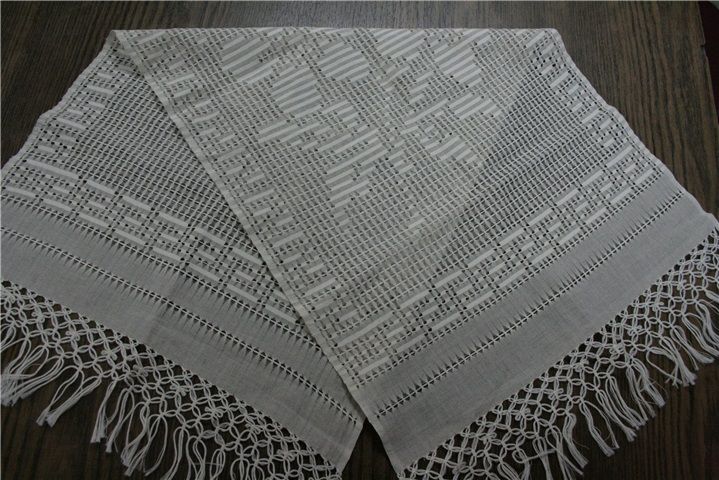
Rize Cloth
In the unique geography of the Black Sea, in Rize where every shade of green meets, there is an ancient handicraft that has been kept alive for centuries: Rize Cloth. Known by its local name Feretiko, this special weave is far more than just a fabric; it is a symbol of culture, tradition, and mastery.
The Origin and Raw Material of Feretiko
The story of Rize cloth begins with its raw material, which is the most important feature that distinguishes it from other weaves. Made from kendir yarn (hemp fiber) , this cloth originally obtained its hemp yarn from India and Russia. However, today, by embracing this ancient tradition, hemp production has been revived in the fertile lands of Rize. Now, the yarns for Rize cloth are obtained from hemp grown in fields across the province, primarily in Çayeli. This situation has both ensured the sustainability of the tradition and reinforced the importance of local production.
From the Language of the Heart to Colors: The Secret of the Fringes
One of the first visual elements that comes to mind when Rize cloth is mentioned is the silk fringes on its edges and the colorful ornaments woven into these fringes. However, these ornaments carry not only an aesthetic concern but also a deep meaning. In tradition, the colors and patterns on the fringes of the cloths prepared for a young girl's dowry are like a letter of emotion. These ornaments function as a mysterious language that conveys whether the girl is willing to marry or not. The fringes woven with love and willingness are, in a sense, a reflection of the girl's heart.
A Matter of Patience and Attention: The Weaving Process
Rize cloth requires great effort and care at the loom. During weaving, in addition to the skilled hands, the hands, arms, feet, eyes, and ears must always be active and attentive. This holistic coordination is essential for flawless weaving. Every detail, from the tension of the yarns to the density of the pattern, is shaped by the meticulous attention of the masters.
The weaving style also varies significantly depending on where the cloth will be used. For example, the weave density, pattern, and thickness of a cloth to be used for home decoration, as a tablecloth or a coaster, are completely different from those of a cloth to be used for clothing. This flexibility demonstrates that Rize cloth is a versatile fabric.
Idioms from the Language of the Loom
Rize cloth weaving has such a deep-rooted history that even the movements of the loom have entered daily language as idioms. The back-and-forth movement of the yarn with the shuttle on the loom gave rise to the idiom "This world comes and goes like this" (Bu dünya böyle gelir böyle de gider) , which questions the flow of life. On the other hand, the movements of the mechanism operated by foot pedals, which controls the upper and lower parts of the loom, led to the idiom "This world has both its underside and its upperside" (Bu dünyanın altı da var, üstü de vardır) , pointing to both the visible and invisible aspects of the world. These idioms show that Rize cloth is not just a handicraft but also part of a system of thought.
Testimony of History and Unique Characteristics
The quality and durability of Rize cloth are confirmed by historical records. It is known that Rize cloth was used even for the shirts of sultans in the Ottoman palaces. This preference is the greatest testament to the comfort and natural structure the fabric provides when it meets the skin.
Another significant historical note regarding the fabric's durability dates back to the 8th century. The Genoese used these yarns to make both ropes and flags for their ships. They needed such a durable material to withstand the harsh, rainy weather of the Black Sea. Indeed, one of the most important features of Rize cloth is its resistance to the region's constantly rainy climate. Furthermore, unlike synthetic fabrics, it does not cause sweating; on the contrary, it absorbs moisture, keeping the body dry and cool.
Perhaps its most impressive feature is its longevity. When stored under the right conditions, its ability to last for hundreds of years in chests without deteriorating reveals just how robust and high-quality this weave truly is.
Rize cloth, Feretiko, is not merely a weave; it is a cultural heritage reflecting the patience, aesthetic sense, historical depth, and harmony with nature of the people of the Black Sea. This ancient journey, from the production workshops in Çayeli to the Ottoman palaces, from Genoese ships to modern-day homes, demonstrates how a handicraft can embody a vast accumulation of civilization. Keeping this heritage alive represents one of the strongest threads connecting the past to the future.
Last Modification : 4/20/2026 12:55:23 PM